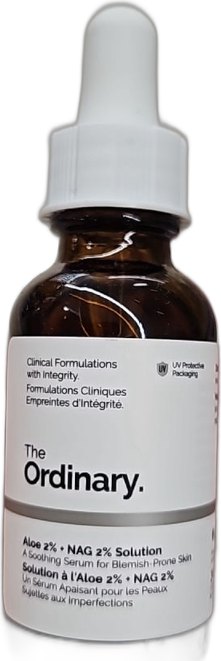
A water-based leave-on serum from The Ordinary positioned for post-acne marks and blemish-prone skin. The formula is a short, fragrance-free blend centered on humectants, aloe, N-acetyl glucosamine, and a peptide, which suggests a soothing and lightly hydrating profile. Performance for dark marks is likely moderate rather than fast-acting.
What people say online
Pros
Cons
Scored for skin — based on what its ingredients contribute.
What it may help with
Whether the ingredient helps increase the skin’s water content — humectants that attract water, ingredients that reduce water loss, or ones that make skin feel less dry.
From Glycerin, Biosaccharide Gum-2, Acetyl Glucosamine, Pentylene Glycol
Whether it can improve smoothness and surface texture — roughness, flaking, clogged pores, or unevenness. Exfoliating acids, retinoids, and smoothing moisturizers may score here.
From Lactic Acid, Palmitoyl Pentapeptide-4, Glycerin, Acetyl Glucosamine
Whether it can help visible signs of aging — fine lines, wrinkles, loss of firmness, or photoaging.
Whether it can calm the skin — linked to less redness, irritation, discomfort, or visible reactivity.
From Hydroxymethoxyphenyl Decanone, Aloe Barbadensis Leaf Juice Powder, Biosaccharide Gum-2, Glycerin
Whether it can help uneven tone, dark spots, melasma-like discoloration, or post-inflammatory hyperpigmentation — including brightening and tyrosinase-inhibiting ingredients.
Things to watch
Whether it can make skin more sensitive to sunlight, raising the risk of sunburn or UV-related irritation. Relevant for some exfoliating acids, retinoids, and certain plant-derived ingredients.
From Lactic Acid
Risk of short-term irritation — stinging, burning, dryness, redness, or discomfort. Common for strong actives, acids, retinoids, fragrances, and harsh surfactants.
From Lactic Acid, Ethylhexylglycerin, Phenoxyethanol, Pentylene Glycol
Risk of allergic contact dermatitis or immune-based reactions. Fragrance allergens, preservatives, botanicals, and some dyes may score here.
From Chlorphenesin, Lactic Acid, Ethylhexylglycerin, Phenoxyethanol
Whether it may sting or irritate around the eyes. Relevant for sunscreens, fragrances, acids, surfactants, and volatile ingredients.
Whether it can weaken or damage the skin barrier — harsh surfactants, strong exfoliants, high alcohol content, or overuse-prone actives.
From Lactic Acid
GOOD · 9
NEUTRAL · 5
CAUTION · 4
Find out exactly what you put onto your skin. Scan any product before you buy. Free and independent — no brand is paying us. Available on both on Android and Apple
Loading comments…