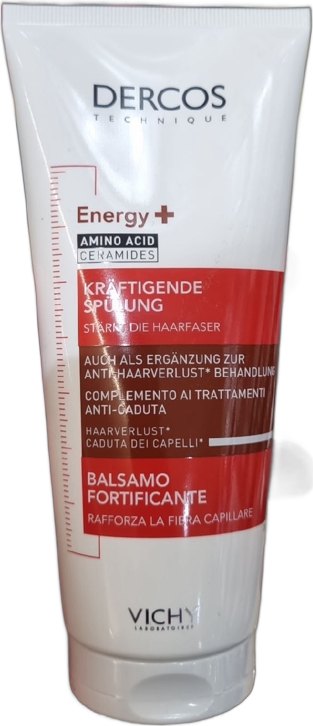
A rinse-off fortifying conditioner for weak or breakage-prone hair. It adds slip, softness, and barrier-style conditioning while supporting the look of stronger hair with aminexil, amino acid support, and ceramide. The main uncertainties are fragrance sensitivity and whether the anti-hair-loss claims are meaningful beyond breakage reduction.
What people say online
Pros
Cons
Scored for hair & scalp — based on what its ingredients contribute.
What it may help with
Whether it makes hair feel softer, smoother, or more manageable — emollients, silicones, cationic polymers, and oils.
From Sunflower Oil, Glycerin, Stearamidopropyl Dimethylamine, Cetearyl Alcohol
Whether it has evidence or plausible relevance for supporting hair growth, reducing shedding, or improving scalp conditions linked to density.
Whether it helps reduce breakage — improving lubrication, flexibility, fiber strength, or protection from mechanical damage.
Whether it helps reduce dandruff, flaking, or Malassezia-related scalp issues — usually recognized anti-dandruff actives.
From Salicylic Acid
Whether it reduces friction so hair is easier to comb or brush.
From Stearamidopropyl Dimethylamine, Cetearyl Alcohol, Hydroxypropyltrimonium Chloride, Glycerin
Things to watch
Risk of allergic contact dermatitis or immune-based scalp reactions — fragrance, preservatives, hair dyes, and botanicals may score here.
From Fragrance
Risk of itching, burning, redness, dryness, or discomfort on the scalp.
Whether it may clog follicles or cause scalp bumps in susceptible users — heavy occlusives, certain oils, or buildup-prone ingredients.
From Isopropyl Myristate
Whether it can accumulate on hair or scalp over time — causing heaviness, dullness, residue, or reduced volume.
Whether it may dry out the scalp, strip oils, or worsen flaking and tightness.
GOOD · 9
CAUTION · 4
Find out exactly what you put onto your skin. Scan any product before you buy. Free and independent — no brand is paying us. Available on both on Android and Apple
Loading comments…