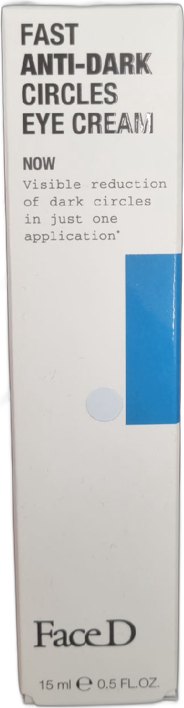
A tinted eye-contour cream that works like a cosmetic corrector with skincare extras: silicones, humectants, peptides, vitamin E, and light-reflecting pigments help smooth, hydrate, and visually soften dark circles. It is best for people wanting immediate coverage plus some treatment-style support, but fragrance and a rich, pigmented texture may be less suitable for very sensitive or crease-prone under-eyes.
What people say online
Pros
Cons
Scored for skin — based on what its ingredients contribute.
What it may help with
Whether the ingredient helps increase the skin’s water content — humectants that attract water, ingredients that reduce water loss, or ones that make skin feel less dry.
From Hyaluronic Acid, Sodium Hyaluronate, Glycerin, Tocopherol
Whether it provides direct protection against UV radiation.
Whether it can improve smoothness and surface texture — roughness, flaking, clogged pores, or unevenness. Exfoliating acids, retinoids, and smoothing moisturizers may score here.
From Citric Acid, Hyaluronic Acid, Sodium Hyaluronate, Darutoside
Whether it supports the skin barrier — restoring lipids, reducing water loss, aiding barrier repair, or strengthening the skin’s protective function.
From Hyaluronic Acid, Glycerin, Sodium Hyaluronate, Tocopherol
Whether it can help visible signs of aging — fine lines, wrinkles, loss of firmness, or photoaging.
From Hyaluronic Acid, Sodium Hyaluronate, Tocopherol, Hexapeptide-3
Things to watch
Risk of allergic contact dermatitis or immune-based reactions. Fragrance allergens, preservatives, botanicals, and some dyes may score here.
From Fragrance, Ethylhexyl Methoxycinnamate, Cera Alba, Tocopheryl Acetate
Whether it has meaningful potential to be absorbed into the body at levels that may matter biologically. Most cosmetic ingredients score low unless there is known concern or high exposure.
From Ethylhexyl Methoxycinnamate, Fragrance, Butylated Hydroxytoluene
Risk of short-term irritation — stinging, burning, dryness, redness, or discomfort. Common for strong actives, acids, retinoids, fragrances, and harsh surfactants.
From Fragrance, Citric Acid, Sodium Chloride, Phenoxyethanol
Whether it has known or suspected hormone-related activity or endocrine-disruption concern.
Whether it can make skin more sensitive to sunlight, raising the risk of sunburn or UV-related irritation. Relevant for some exfoliating acids, retinoids, and certain plant-derived ingredients.
From Citric Acid
GOOD · 11
NEUTRAL · 21
Find out exactly what you put onto your skin. Scan any product before you buy. Free and independent — no brand is paying us. Available on both on Android and Apple
Loading comments…